Principal · John Wyatt
I came back
to be more.
Every seat I've held taught me a different way companies grow, stall, and recover. I bring all of them to the table.
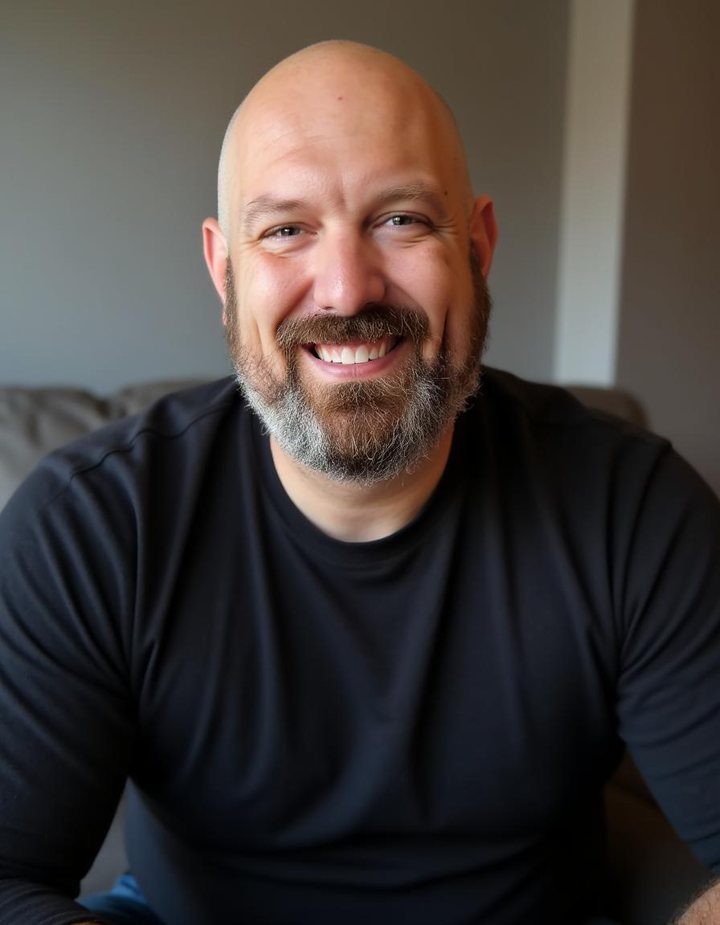
Every seat I've held taught me a different way companies grow, stall, and recover. I bring all of them to the table.
My first seat was in finance, building parallel ROI models against other people's business cases. The job taught me the question I still ask first: was this number built forward from the facts, or backward from an answer somebody already picked? You can tell inside twenty minutes. That discipline runs through everything I do.
Over my corporate career I built fifty investment cases over $1M that were approved, at Abercrombie & Fitch, World Market, and companies nobody puts on a slide. The rule never changed: the number gets built forward, or it doesn't get built.
At Abercrombie & Fitch, I was handed an Asia e-commerce business doing $15M and a three-year plan to prove it out. I asked to run it myself, wrote my own forecast, and grew it to a $100M annual run rate in eighteen months. Then I taught the company to run it without me and came home. The growing was the job. The handoff was the accomplishment.
For two years I oversaw digital marketing, analytics, and corporate strategy at a national specialty retailer, the kind of seat where every discipline answers to the same number. I don't name the company publicly. The work made the next chair possible.
At World Market I led roughly ninety percent of the marketing function: digital, analytics, site operations, product, and content. Tens of millions in spend across the US and Asia, and digital strategy for a billion-dollar retailer. Marketing at that scale is capital allocation with a creative department attached, and I ran it like one.
Worth explaining, because a careful reader will check. Company policy capped the titles of fully remote executives, and Senior Director was the highest card a remote leader could carry. So that's the card I carried, with a salary and a scope that said otherwise. The chair held CMO expectations in everything but new creative, which routed around me by design. That's why my LinkedIn entry reads "reporting to CEO": it's the plainest true description of the seat.
I'd rather explain a modest title than defend an inflated one. The one chair I've held with the title on the door is CEO: I founded Virsyn and ran it from the first line of code to its exit.
People hear retail and think stores. Here's what the work actually was: onshore manufacturing and just-in-time logistics. Distribution centers and the freight math that feeds them. Sourcing and selling in China, Japan, and South Korea, on both sides of the table. Media at national scale. And corporate finance run demand-back: starting from what the customer will buy and working it through to what every department and factory needs.
If your business makes things, moves things, or sells things, I've run the discipline your problem lives in.
In 2024 I opened Wyatt Sparks. In early 2025 I founded Virsyn, an AI company: building, deploying, and measuring AI inside real businesses while most of the market was still running pilots. Virsyn exited through its partnership with C4SaaS in September 2026. Every tool I recommend, I've tested. The misses are part of the credential. Nobody bats a thousand, anywhere, and especially in technology.
My operating history was built at half-billion-dollar-and-up scale: operating budgets to $100M, capital budgets to $50M, and capital board meetings from both sides of the table. Fractionally I sit as CFO, most effectively at companies between $50M and $500M in revenue. The CFO seat I take is the strategic one: forecasting, capital allocation, investment governance, and knowing where to cut. The controller, the CPA firm and outside counsel report up to this seat, so they get direction from it, not only a forecast. Most owners would rather not manage the accountants and the lawyers. I like that work. This seat makes the numbers decide things. My sharpest edge is translating a shared vision into an action plan with dates and owners. Above you, below you, or next to you. The org chart doesn't matter. The shared vision does.
The last two years added the technology layer: AI built, shipped, and measured, with our own money on the line.
Columbus, Ohio · LinkedIn · Inbox@WyattSparks.com